Toast Alternatives: When Restaurant Software Starts Charging for Everything

Toast’s restaurant POS covers table service, quick service, kitchen routing and connected online ordering. Those are the starting points for a comparison with other restaurant systems.
Also assess the hardware and guest-facing design. Confirm which devices can run each workflow and how much of the booking flow, receipts, loyalty pages and other customer interactions can be customised.
The Add-On Pricing Model
Ask for an itemised quote covering the functions you need: online ordering, loyalty, gift cards, marketing, payroll, team management, scheduling, catering, API access and reporting. Include handhelds, additional locations and any implementation costs.
Confirm payment provider requirements and processing terms for your market. For several sites or legal entities, check the routing and reporting options as well as the rate.
Support When You Actually Need It
A disconnected payment terminal, failed kitchen printer or unavailable ordering page needs a clear response process. Check how staff reach support during evenings and weekends.
Ask about response times, escalation and the steps staff can take while an issue is being resolved. Include the support terms in the comparison.
When the Business Outgrows the Till
A mixed-use venue may need CRM, hotel management, memberships, events, ticketing, wellness bookings and entity-level reporting alongside POS and payments. List the products required for that complete setup.
Then follow a guest who dines, stays, books a treatment and attends an event. Check whether staff can see those records together and how they reach financial reports.
Signs It Might Be Time to Look at Alternatives
A review may be useful if the total bill, hardware requirements, branding controls or support arrangements no longer suit the venue.
The same applies when separate hotel, memberships, wellness or events tools create repeated data matching and reconciliation work.
What Changes With Tiquo
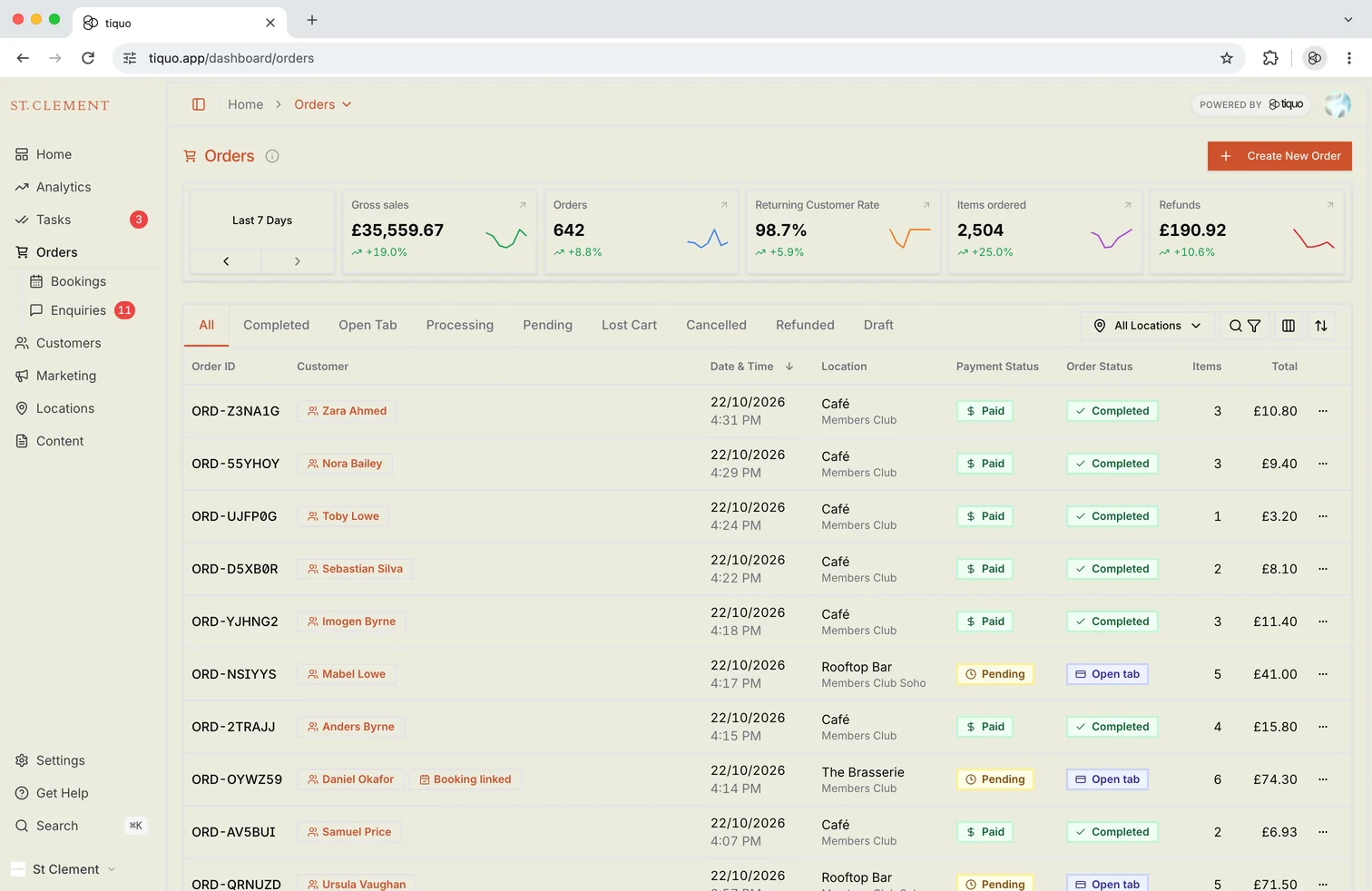
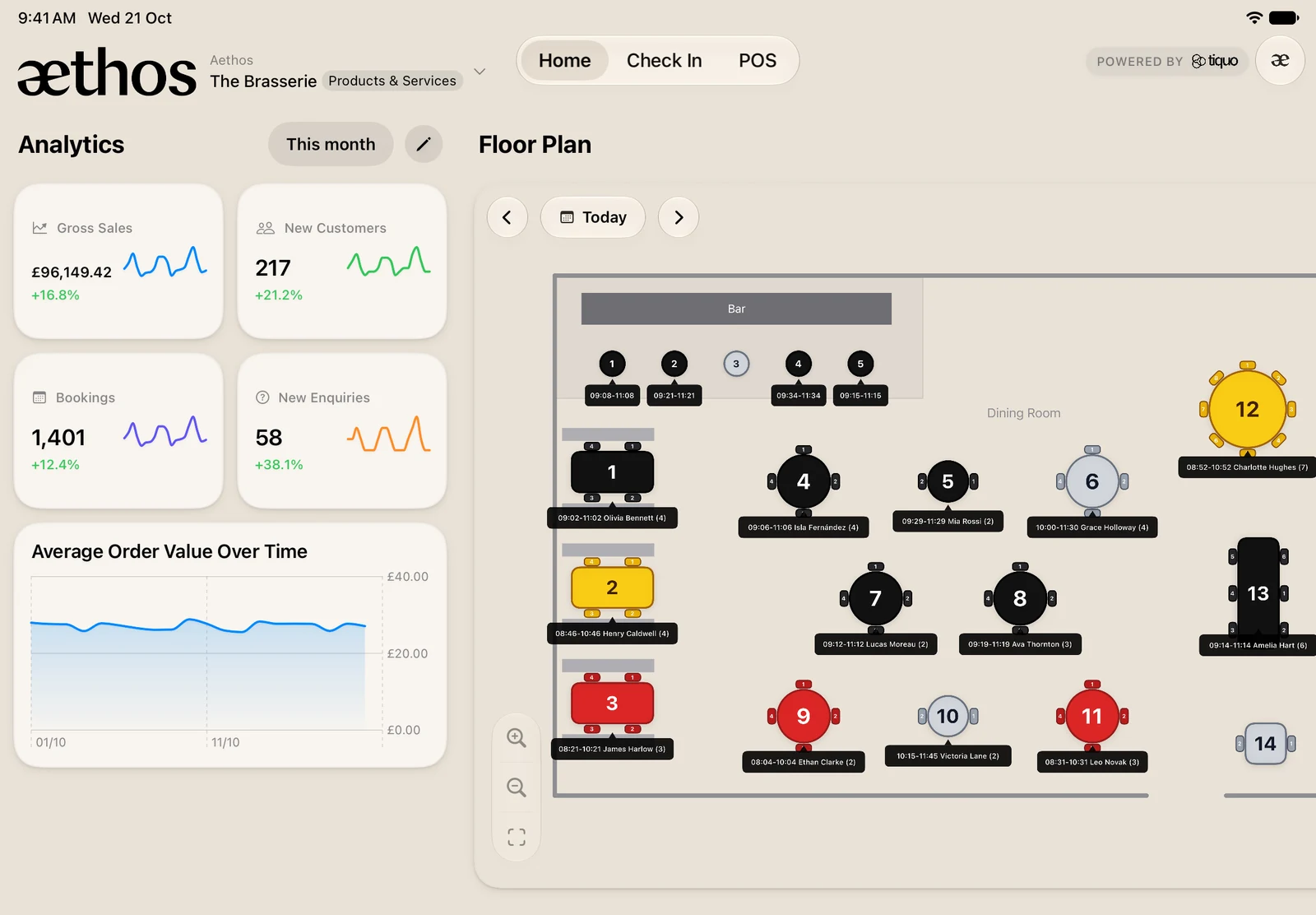
Tiquo’s core platform covers POS and orders, online ordering, loyalty, memberships, CRM, bookings, enquiries and events, forms, inventory, payments and reporting. Marketing, messaging, hardware, additional locations, bespoke apps and websites, and implementation may be priced separately. Supported hardware includes web, iPhone and iPad experiences alongside S700, S710 and T600 terminals.
Customer-facing flows, booking journeys, membership portals, loyalty programmes and receipts support the operator’s branding.
Tiquo does not currently position itself as payroll software. Optional services and add-ons are listed in each proposal.
The platform also covers spa and wellness bookings, private hire, ticketing, cross-location memberships and customer and company records. Hotel operators can use connected Tiquo workflows or supported PMS integrations.
Restaurant visits, hotel stays, spa bookings, event tickets and memberships can contribute to the same customer profile. Social Graph records customer relationships. Customer analytics adds predictive lifetime value and expected next-order ranges alongside historic activity.
Tiquo uses Stripe for online, terminal and Tap to Pay processing. For configured connected accounts, a checkout can be allocated across several payment destinations and linked to the order. Tiquo also supports stored credit for eligible products and services.
Operators work directly with the Tiquo team for support. Confirm the arrangements for implementation, routine requests and urgent issues as part of the proposal.
The Decision
Compare the full price and required workflows, then test the hardware and guest-facing experience with your team.
For a venue with several hospitality services, include the cost of connecting them and the effort of migrating. The useful comparison is the complete operating setup.



Latest Stories
WebMCP explained: how AI agents can book through hospitality websites
What WebMCP is, how websites register tools that AI agents in the browser can call, where the standard and Chrome support stand in October 2026, and what it means for booking pages.

How to sell spa treatments and dining to hotel guests before they arrive
Pre-arrival upselling for hotels: when to send spa and dining offers, what to offer which guests, how to make offers bookable, and the UK consent rules for promotional messages.
How to split bills and move tabs between tables
How to split bills by item, seat, equal share or amount, and how to move a tab or selected items to another table without sending food to the kitchen twice or charging twice.