How Tiquo and Stripe Are Powering Global Payments for Leading Hospitality Groups

A hotel or members’ club may run restaurants, wellness, events, accommodation and retail in the same building. Different brands or legal entities can be involved in a single guest visit.
The Payment Problem Nobody Talks About
When departments use separate payment systems, finance has to combine their records and guests may need to settle several bills. The challenge is keeping each payment connected to the service and entity it belongs to.
Tiquo brings operations, bookings, customer data and payments onto one platform, with Stripe providing payment infrastructure for online and in-person processing.
What This Actually Looks Like in Practice
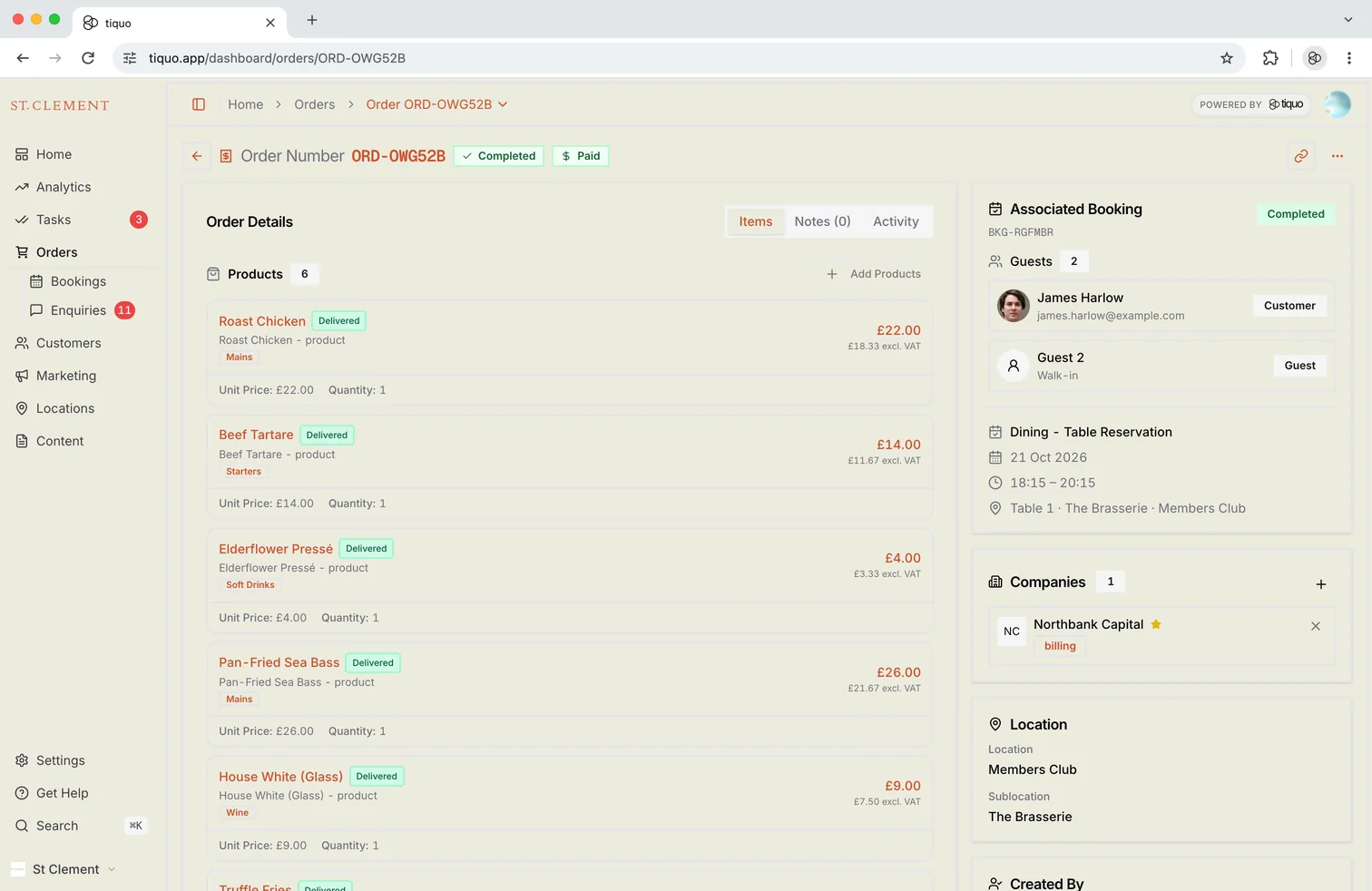
Tiquo manages bookings, memberships, POS, retail, enquiries, CRM and marketing, with payment records connected to those activities.
The platform supports online and in-person payments, deposits, pre-authorisations, recurring membership billing, gift cards, open tabs, split payments, account charges, invoices, payment links and refunds.
Shared records let staff and finance follow those payments alongside the original order or booking.
Payments That Work Across Borders
A group with locations in London, Paris and New York needs to consider currencies, local payment methods and regional requirements.
Tiquo uses Stripe’s infrastructure for payment processing across supported markets. Confirm the currencies, methods and account setup available for each location during implementation.
Online and in-person payments can be linked to the same customer journey, whether the guest is booking a room, paying for a treatment or renewing a membership.
For example, a guest may pay a room deposit online, add a restaurant booking and spa treatment, then charge eligible purchases to their room during the stay. The linked records let staff follow the charges through to settlement.
In Person Payments That Don’t Break the Flow
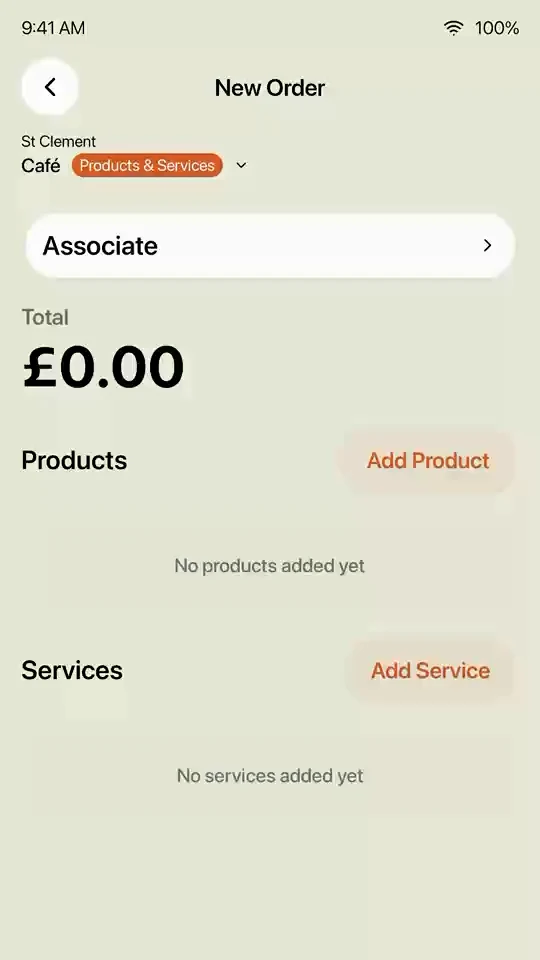
Tiquo runs its application on S700, S710 and T600 terminals, alongside Tap to Pay on iPhone. Staff can manage orders, bookings, tabs, memberships and payments from one interface.
With a handheld terminal, a server can take an order and payment at the table. Staff can also manage open tabs across areas of a members’ club or hotel.
Receipts and invoices link to the original order or booking.
Solving the Multi Entity Headache
Rooms, spa services, restaurant sales and memberships may belong to different companies. A combined guest bill needs to preserve those distinctions.
Without configured allocation, the venue may need separate payments or manual work to divide the revenue afterwards.
For configured connected accounts, Tiquo can allocate a checkout across several payment destinations and keep the allocations linked to the order.
Split payments also cover equal shares, custom amounts, percentages and individual items, including service charge allocation. Staged payments can be used for events or deposits.
Memberships, Recurring Billing and Stored Credit
Members’ clubs, wellness venues and coworking spaces often need recurring billing tied to membership status and benefits.
Tiquo uses Stripe for recurring charges, saved payment methods and failed payment handling. Membership tiers connect to the POS, booking and CRM records.
Tiquo also supports stored credit for eligible products, services and bookings. Loads, redemptions, adjustments and refunds stay linked to the customer record.
Security Without the Complexity
Operating across multiple countries, channels and entities requires an appropriate payment and security setup.
Tiquo does not store card details directly. Stripe handles card data and provides PCI compliance, strong customer authentication, fraud monitoring and tokenisation for the payment processing it supplies.
The Hidden Cost That Disappears
With payments spread across five systems, three locations and two entities, finance may need several exports to trace a transaction.
Tiquo keeps payment, booking, membership, POS and customer records together. Finance can track payments by location or entity, review deposits and refunds, and report from those shared records.
Why This Partnership Matters
Tiquo manages the hospitality workflows while Stripe provides payment processing. The implementation needs to match the venue’s locations, supported payment methods and entity structure.




Latest Stories

WebMCP explained: how AI agents can book through hospitality websites
What WebMCP is, how websites register tools that AI agents in the browser can call, where the standard and Chrome support stand in October 2026, and what it means for booking pages.

How to sell spa treatments and dining to hotel guests before they arrive
Pre-arrival upselling for hotels: when to send spa and dining offers, what to offer which guests, how to make offers bookable, and the UK consent rules for promotional messages.

How to split bills and move tabs between tables
How to split bills by item, seat, equal share or amount, and how to move a tab or selected items to another table without sending food to the kitchen twice or charging twice.