Square Alternatives: Why Growing Hospitality Businesses Eventually Outgrow It
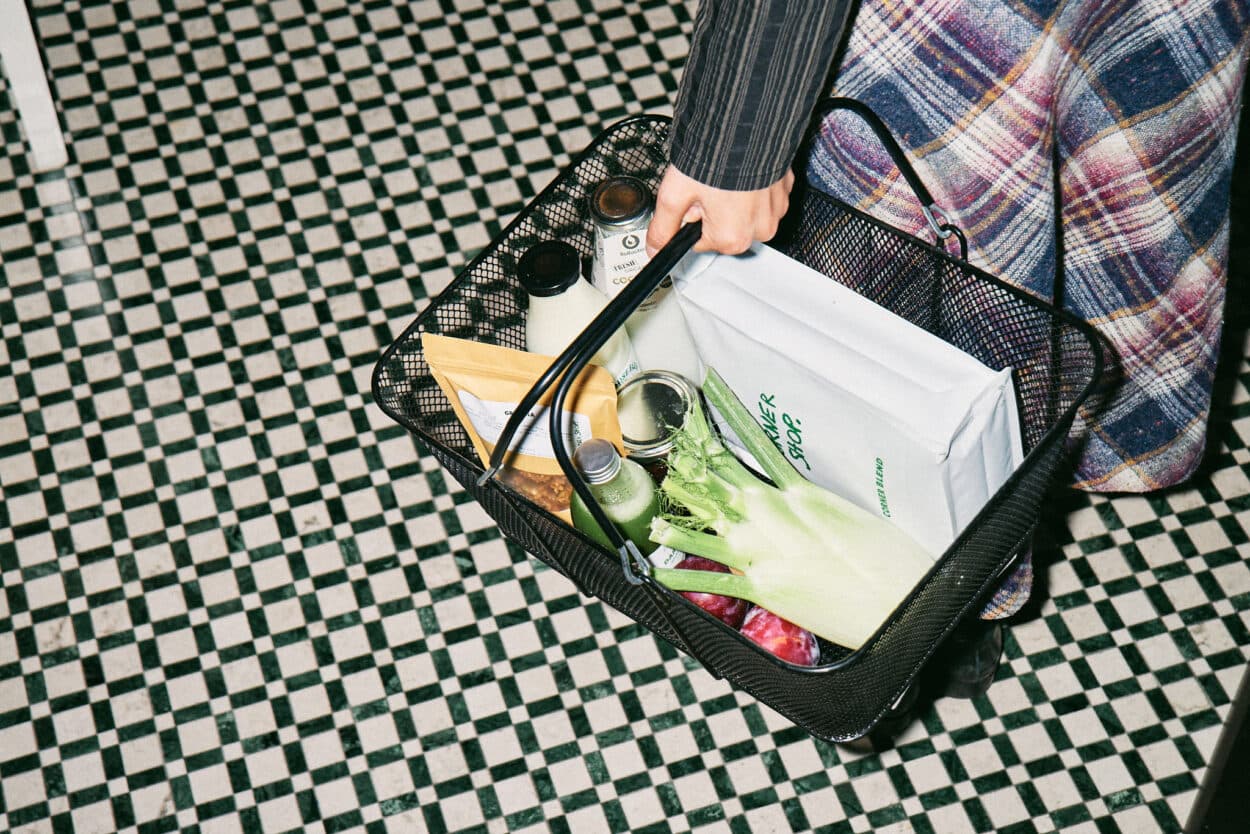
Square combines payments, POS, hardware and reporting for businesses including cafés, food trucks, shops and restaurants. Its straightforward setup can appeal to operators opening a venue or taking payments for the first time.
Growth adds requirements that need their own review. A second location, a hotel or a membership programme may change the customer records, billing and reporting the business needs.
What Square Is Built For
For a relatively simple venue, compare everyday POS tasks, payment costs, hardware and training. More features are only useful if the operation needs them.
Square also supports multi-location setups, with up to 300 locations under one account and location-specific reports, bank accounts, stock and device settings.
For a mixed-use business, go further and test how records connect across services, brands and legal entities.
Where Square Starts to Fall Short
Payment costs: compare the available plans using your own transaction volumes and card mix. At higher volumes, include any custom pricing offered alongside standard rates.
Shared services: test customer profiles, loyalty, gift cards, memberships and tabs across locations. Check what is included and where integrations or custom work would be needed.
Additional tools: list any reservation system, CRM, hotel PMS, membership platform or finance software used alongside Square. Include their contracts, support needs and the time staff spend matching records.
Hospitality workflows: test the requirements for accommodation, spa and wellness bookings, private hire, memberships and payment allocation. Confirm the tools needed for each rather than assuming the POS covers them.
Branding: review payment screens, digital receipts, loyalty pages and booking widgets. Check the design controls and any provider branding that remains.
Signs It Might Be Time to Look at Alternatives
Consider a review when processing costs have become significant, staff need several tools to follow customer activity, or benefits do not work consistently across services.
Manual financial reconciliation, repeated report exports and payment allocation outside the system are also useful starting points. Bring those tasks to the demonstration of any replacement.
How Tiquo Compares
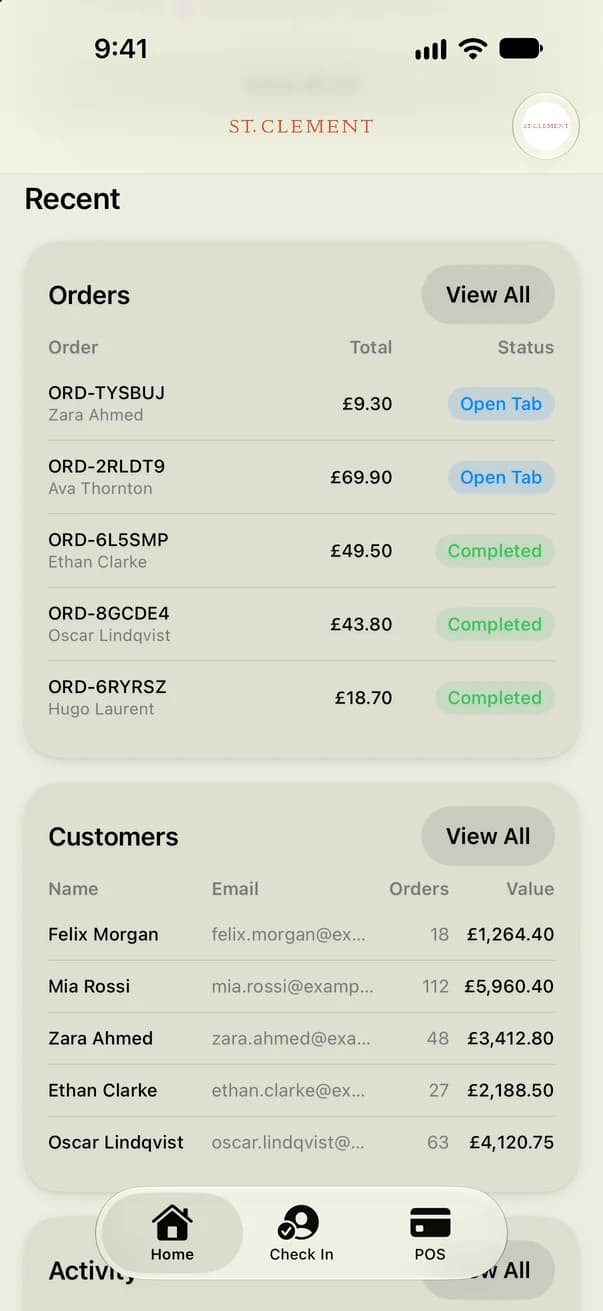
Tiquo combines POS, CRM, bookings, memberships, hotel PMS, loyalty, gift cards, events, ticketing, payments and analytics on a shared database.
| Square | Tiquo | |
|---|---|---|
| Point of sale | Plan, processing rates and hardware | Built-in POS with Stripe processing |
| Payment processing | Plan, processing rates and hardware | Built-in POS with Stripe processing |
| Multi-location support | Shared records and local settings | Shared platform and reporting |
| Hotel PMS | Tools required for each workflow | PMS, bookings, private hire and ticketing included |
| Spa and wellness bookings | Tools required for each workflow | PMS, bookings, private hire and ticketing included |
| Event management | Tools required for each workflow | PMS, bookings, private hire and ticketing included |
| Membership commerce | Benefits across services and locations | Cross-service benefits with operator rules |
| Cross-location loyalty | Benefits across services and locations | Cross-service benefits with operator rules |
| Multi-entity payment splitting | Support for your entity structure | Allocations for configured connected accounts |
| Customer CRM and profiles | Activity visible across services | Shared profile and Social Graph |
| Predictive customer value and next-order timing | Available reports and metrics | Customer lifetime value and next-order ranges |
| Customer-facing branding | Guest-facing design controls | Operator branding |
| Setup and onboarding | Training, hardware and migration needs | Confirm training, hardware and migration scope |
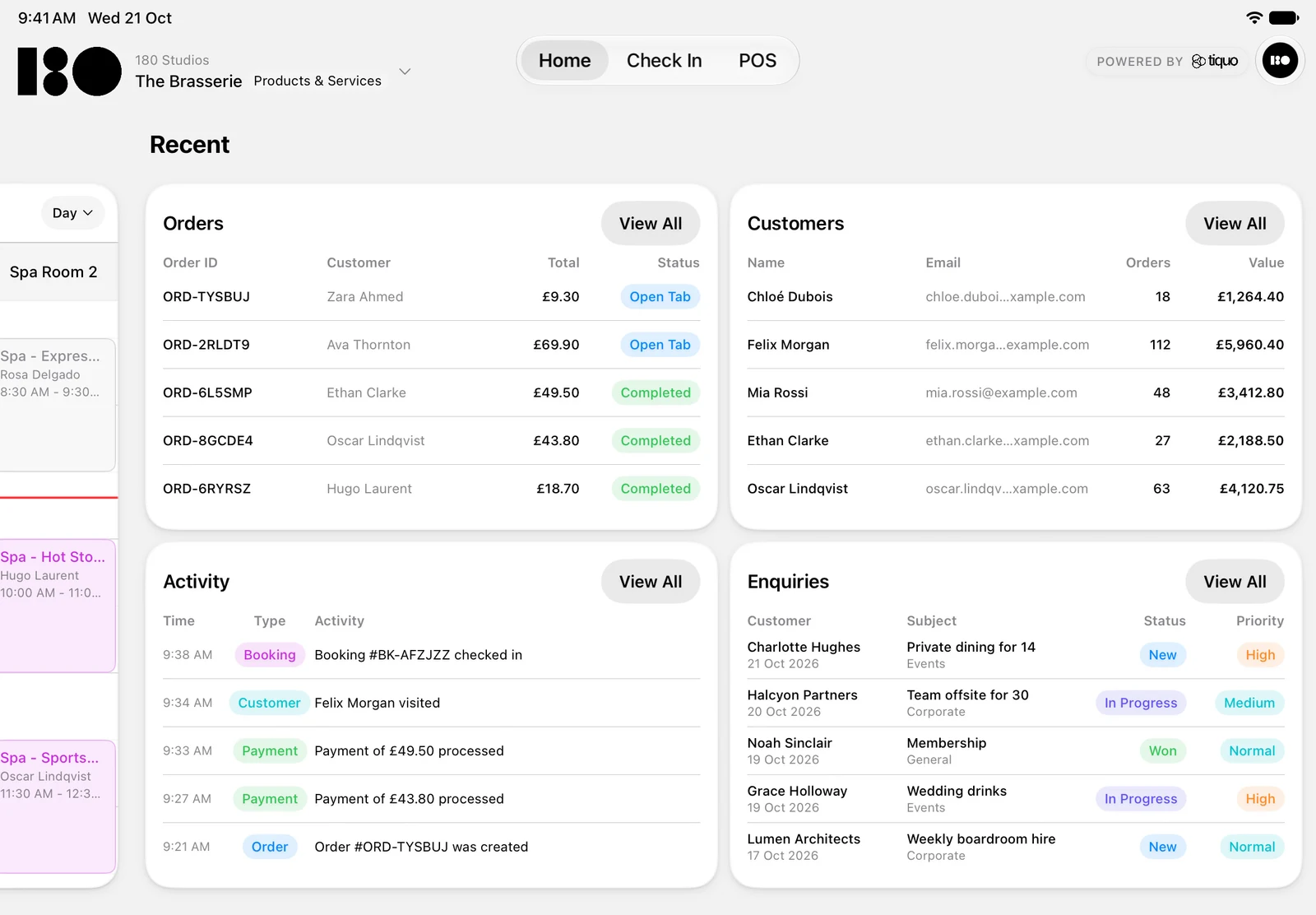
A café purchase, hotel check-in, spa treatment and event ticket feed the same customer profile. The CRM combines spending and activity with predictive customer metrics, while Social Graph records relationships between customers.
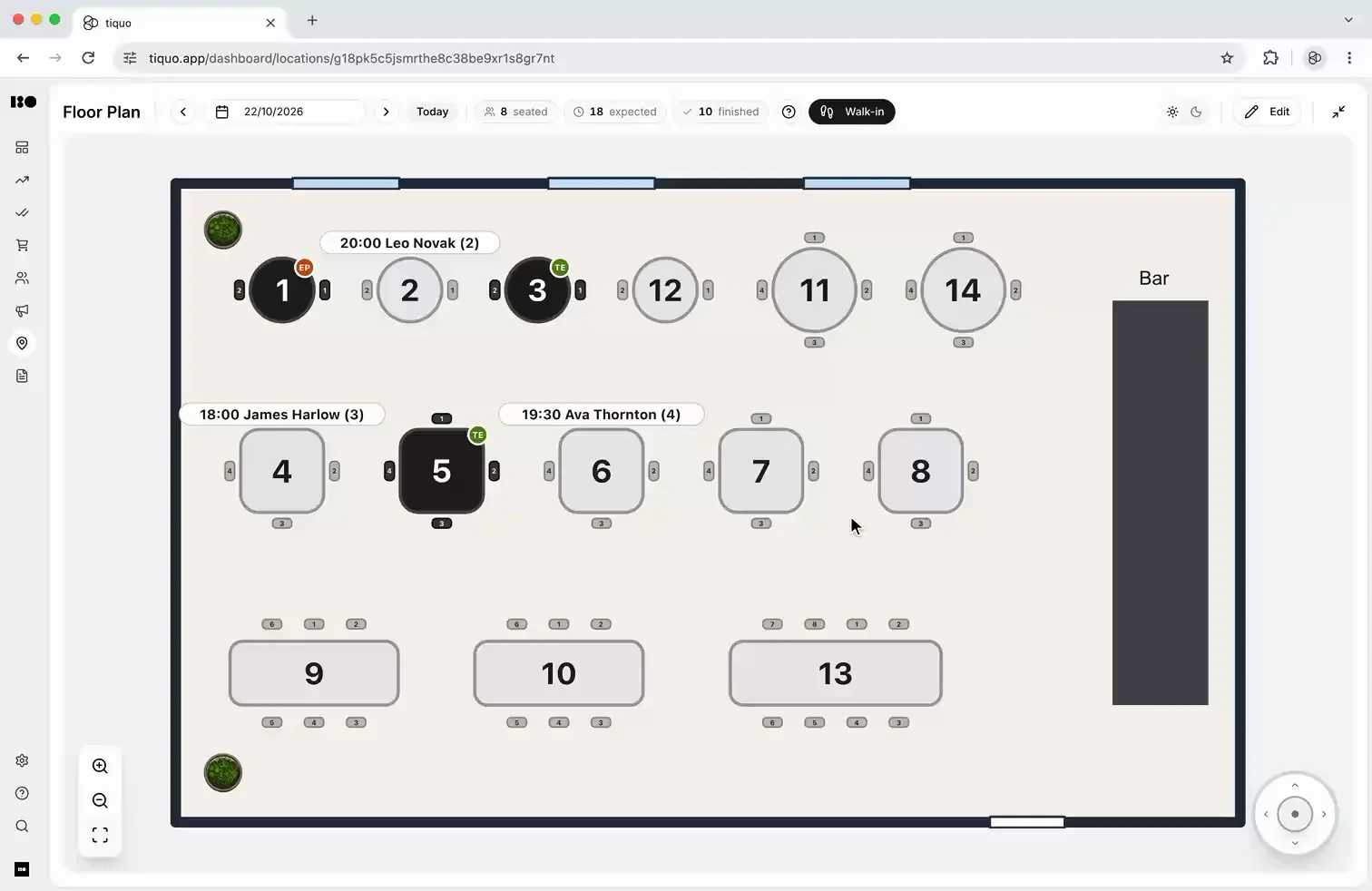
Tiquo uses Stripe for online, terminal and Tap to Pay processing. For configured connected accounts, a checkout can be allocated across several payment destinations and linked to the order. Tiquo also supports stored credit for eligible products and services. Split payments support equal shares, individual items, percentages and custom amounts across supported payment methods.
A membership programme can apply benefits across the restaurant, gym, hotel and retail areas. Operators control how loyalty benefits and gift cards are redeemed across brands and sublocations.
Hotel PMS, spa and wellness bookings, private hire and exhibition ticketing run on the platform alongside POS. Those activities share customer records and reporting.
The booking flow, loyalty programme, payments and digital membership cards support the operator’s branding.
Tiquo provides more than 250 analytics cards for custom dashboards covering sales, bookings, customers, memberships, enquiries, loyalty, inventory and other operations. Predictive customer lifetime value and expected next-order ranges sit alongside historical reporting.
Making the Decision
If Square meets the venue’s needs, use the current setup as the baseline for cost and ease of use.
If the operation now needs several additional tools, compare the complete cost of subscriptions, integrations, reconciliation and migration. Include the guest experience and the work staff would still need to do.
Tiquo is an option for hospitality operators who want to manage those services on one platform.



Latest Stories
WebMCP explained: how AI agents can book through hospitality websites
What WebMCP is, how websites register tools that AI agents in the browser can call, where the standard and Chrome support stand in October 2026, and what it means for booking pages.

How to sell spa treatments and dining to hotel guests before they arrive
Pre-arrival upselling for hotels: when to send spa and dining offers, what to offer which guests, how to make offers bookable, and the UK consent rules for promotional messages.
How to split bills and move tabs between tables
How to split bills by item, seat, equal share or amount, and how to move a tab or selected items to another table without sending food to the kitchen twice or charging twice.