How to Get Reliable Reporting Across a Multi-Site Hospitality Business

Multi-site reporting can involve POS revenue, booking occupancy, CRM memberships and other operational figures from several tools. Combining those records takes time, especially when each source uses different definitions.
Delays and inconsistencies make pricing, staffing and marketing decisions harder. Before replacing the reporting tool, identify where the figures become difficult to compare.
Why Multi-Site Reporting Breaks Down
A restaurant group with five locations may use the same POS but separate tools for bookings, memberships and events. A hotel portfolio may need additional data from each property’s spa, restaurant and shop.
A data warehouse or business intelligence tool can combine those sources, but the records still need consistent formats, customer identifiers and timestamps. Currency and tax treatments also need to be handled correctly across locations and entities.
Reports inherit missing records and update delays from the systems that supply them. Check those sources as part of any reporting review.
What Reliable Multi-Site Reporting Actually Requires
Agree the definitions and update frequency needed for each report. Then trace a few transactions from the operational system to the group figures.
Shared records: Tiquo links bookings, orders, payments, memberships and loyalty, with payments tied to orders. This reduces cross-system matching and differences caused by separate record formats.
Timing: confirm when each source updates. A daily report may be sufficient for one decision, while staffing or stock adjustments during service may need more recent information.
Entity structure: businesses with multiple legal entities need reports that keep revenue and costs assigned correctly. Confirm the allocation rules and any adjustments finance still needs to make.
Customer identity: check whether activity at different locations reaches the same profile. This affects loyalty analysis, marketing segments and customer value estimates.
How Tiquo Solves This
Tiquo manages POS, bookings, memberships, check-in, payments and CRM on a shared platform across locations and services.
Transactions feed shared reporting as they are recorded, reducing the need to combine exports from those functions.
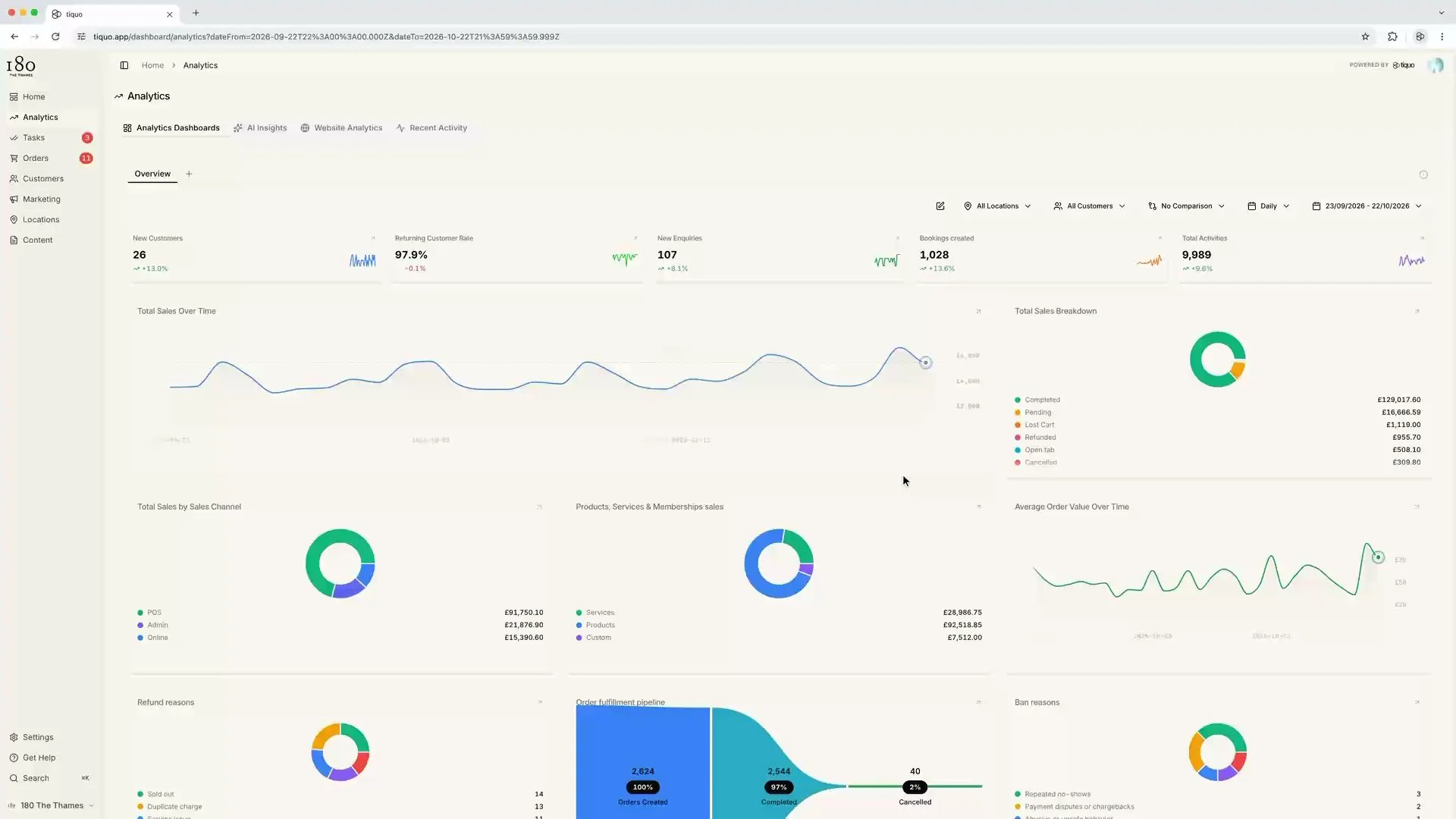
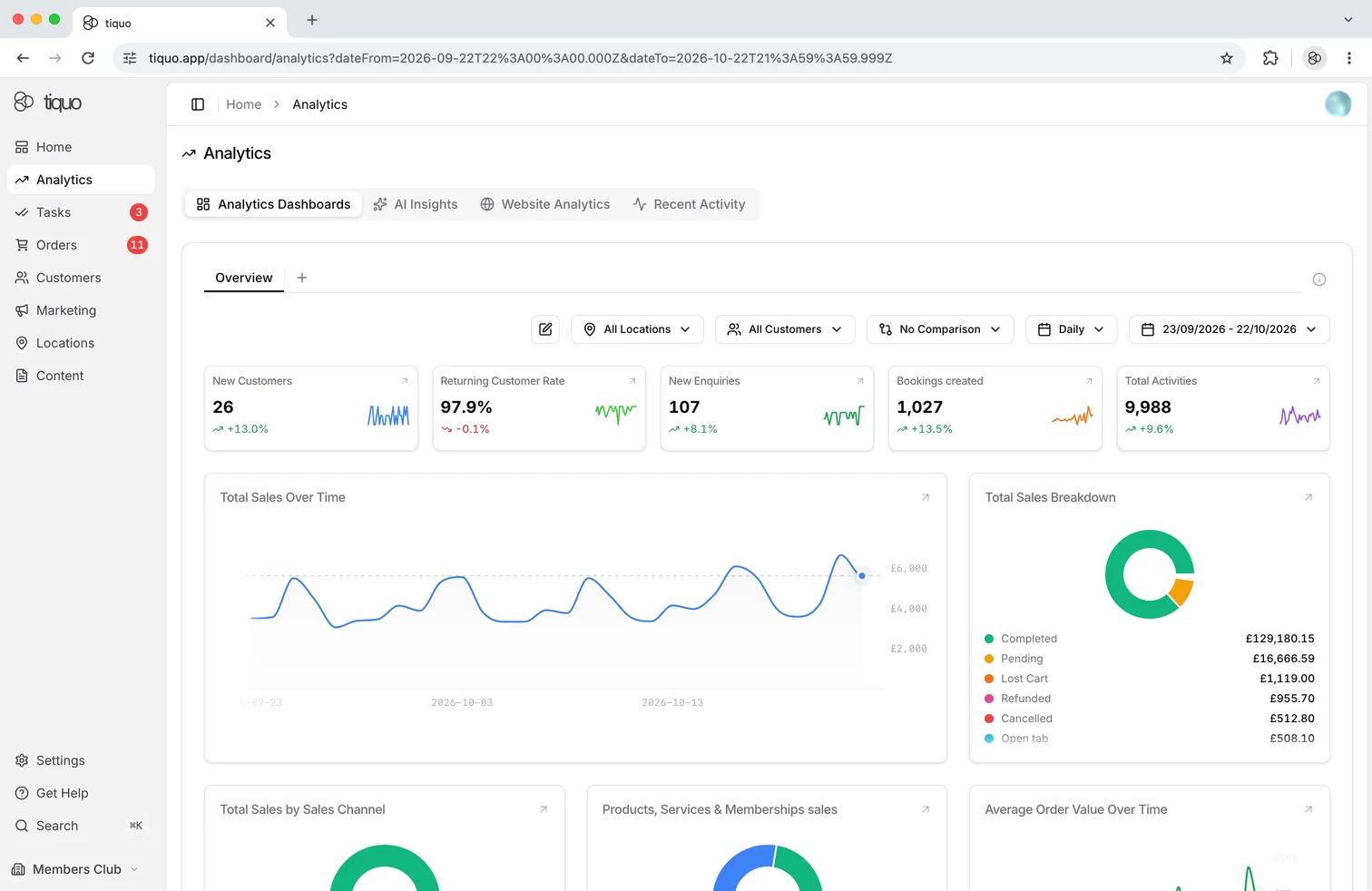
Portfolio dashboards bring together revenue, performance and customer activity. For configured connected accounts, checkout payments can be allocated across destinations and linked to the originating order.
Customer analytics adds predictive lifetime value and expected next-order ranges alongside historic activity. These estimates help teams plan which customers or segments to review.
Social Graph records relationships between customers, adding context to individual profiles and group activity.
The Takeaway
Start with the figures your team has trouble producing or trusting. Check definitions, missing records, update timing and the manual steps used to combine them.
A shared operational platform can remove some of that matching work. Use the same sample transactions and reporting questions to verify the proposed setup.



Latest Stories

WebMCP explained: how AI agents can book through hospitality websites
What WebMCP is, how websites register tools that AI agents in the browser can call, where the standard and Chrome support stand in October 2026, and what it means for booking pages.

How to sell spa treatments and dining to hotel guests before they arrive
Pre-arrival upselling for hotels: when to send spa and dining offers, what to offer which guests, how to make offers bookable, and the UK consent rules for promotional messages.

How to split bills and move tabs between tables
How to split bills by item, seat, equal share or amount, and how to move a tab or selected items to another table without sending food to the kitchen twice or charging twice.