All Articles
AlternativesMar 21, 2026

Nexudus Alternatives: Why Some Operators Eventually Need More Than Workspace Software
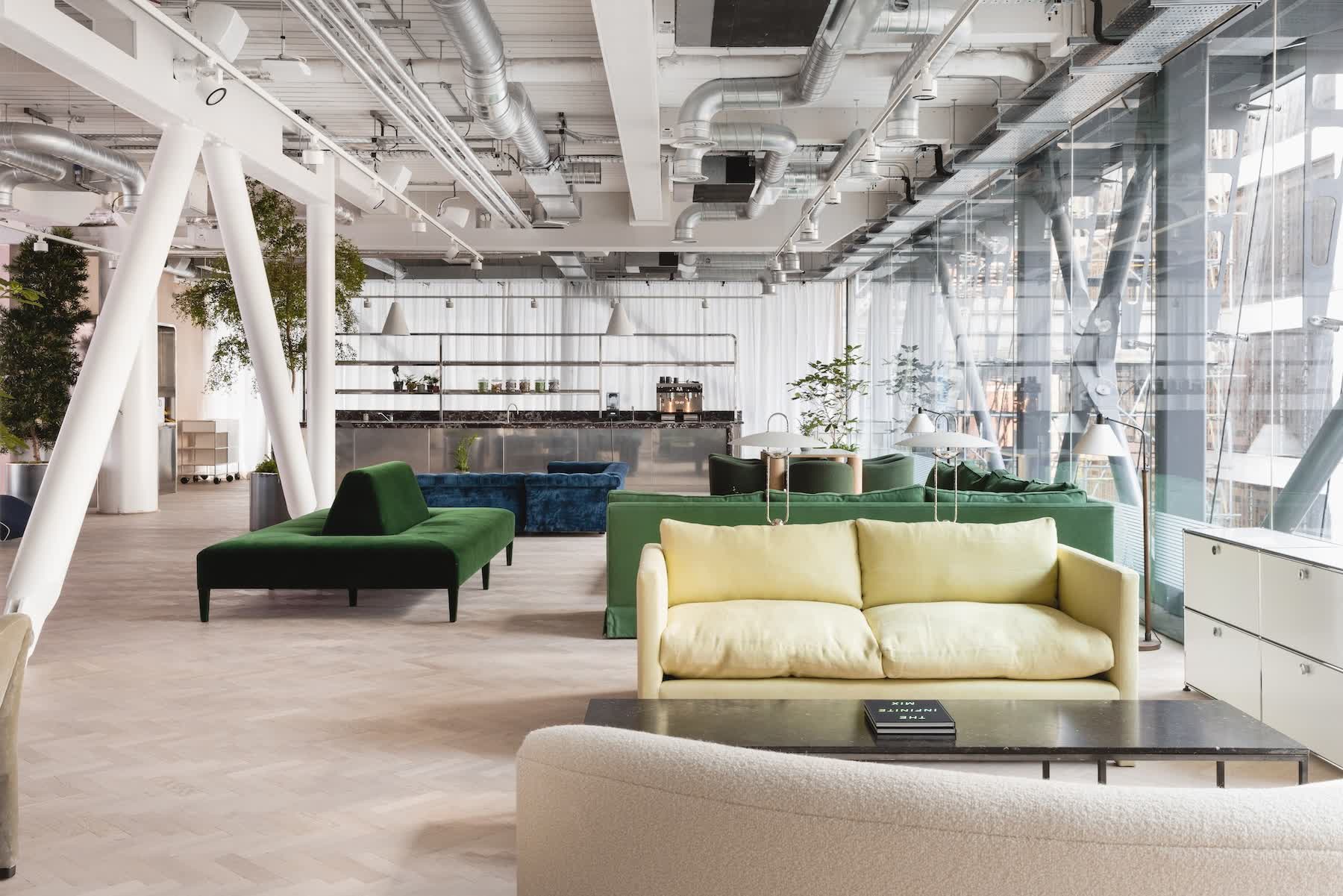
Coworking has changed. What started as an industry built around hot desks, meeting rooms, and monthly passes has expanded into something much harder to categorise. The spaces doing the most interesting things today are not just selling workspace. They are building lifestyle destinations with restaurants, wellness facilities, ticketed events, members’ clubs, private hire programmes, hotels, and retail. They are operating across multiple sites, multiple brands, and multiple legal entities. They are thinking about customer loyalty the way hospitality businesses do, not the way real estate businesses do.

Nexudus was built for an earlier version of this market. That is context for understanding why operators who started with it often find themselves asking whether it is still the right fit.

What Nexudus Was Designed to Do

Nexudus is one of the more established names in coworking and flexible workspace management. Members can sign up online, book a meeting room, pay an invoice, access the building, and interact with the space through one platform. Operators can manage contracts, memberships, desks, offices, meeting rooms, printing, internet packages, visitor flows, and community engagement.

The product is configurable. Operators can customise workflows, pricing plans, booking rules, access permissions, invoicing behaviour, website layout, and member journeys to suit how their particular space runs. For a traditional coworking brand or serviced office operator, that combination of breadth and configurability has some practical value.

The limitations are not about what Nexudus does. They are about what the business becomes.

The Configuration Problem

Flexibility is one of Nexudus’s most marketed features. It is also, in practice, one of the most common sources of frustration.

The more configurable a system is, the more setup work it requires, and the more ongoing management it demands. Nexudus gives operators a lot of settings to manage. Many teams report that the day-to-day experience of using the platform feels less like one coherent product and more like navigating a large set of overlapping modules, settings, and admin layers.

User reviews reflect this consistently. A steep learning curve, an interface that feels cluttered or dated, difficulty locating specific features, and heavy initial setup requirements come up repeatedly. Mobile experience tends to lag behind desktop. Reporting often requires more manual configuration than operators expect. Some integrations, particularly around access control and accounting tools like Xero, sync inconsistently.

The pattern that emerges from people who have actually used the platform is one of frustration rather than satisfaction. Getting Nexudus to do what you need involves a significant amount of time, workarounds, and support tickets. Teams can end up spending a disproportionate amount of time managing the software rather than using it to run the business. Operators who have been through the full implementation process rarely describe it as a smooth or enjoyable experience, and user retention feedback suggests that enthusiasm for the platform tends to decrease over time rather than grow.

The Branding Problem

Nexudus’s member-facing experiences carry the platform’s design rather than the operator’s brand. The member portal and booking interfaces are Nexudus interfaces. Operators can customise them to a degree, but they are working within Nexudus’s framework.

For operators building a lifestyle destination or a premium brand, the gap between the identity they are creating and the generic platform interface their members interact with is a real limitation. A member logging into their portal should feel like they are engaging with the space they joined, not with a coworking software vendor.

Tiquo’s approach is to build every customer-facing touchpoint entirely to the operator’s brand. The technology is invisible. The brand the operator has built is what the member experiences.

What Happens as the Business Grows

The more significant issue tends to surface not because Nexudus breaks, but because the business outgrows the category it was designed for.

Coworking operators that add meaningful F&B, wellness facilities, private hire events, ticketing, retail, hotel rooms, or multiple brands quickly find that Nexudus becomes one layer in a wider stack rather than the platform running the whole operation. A typical evolved setup might look like this: Nexudus handling memberships and room bookings, Stripe for payments, a separate door access system, Xero for accounting, a CRM for commercial relationships, Eventbrite for events, a separate POS for the café, and different tools again for wellness bookings and private hire enquiries.

Each of these products might work well individually. Together they create a familiar set of problems. Customer data is fragmented across systems, with no single view of who a member is and what their relationship with the business looks like across every touchpoint. Finance teams reconcile across platforms. Marketing campaigns are built from incomplete data. A member who books a desk, buys lunch, attends an event, and brings in a new corporate client exists differently in every system. No one has the full picture, and no one can act on it in real time.

The Customer Experience Gap

When different parts of the operation sit in different systems, the member journey starts to fragment in ways that undercut the experience the business is trying to create. Members use one portal for desk bookings, navigate somewhere else for event tickets, pay through a different flow at the café, and manage their membership on yet another separate login. The business presents itself as one brand. The technology experience tells a different story.

For operators building a community, a lifestyle brand, or a premium members’ club, that fragmentation matters. The gap between what you want the experience to feel like and what it actually feels like when someone moves through the building is often a technology problem.

Signs It Might Be Time to Look at Alternatives

Your business has expanded significantly beyond desks, offices, and meeting rooms. You are running four or more platforms alongside Nexudus to cover the full operation. Staff in different departments have no shared view of a customer’s activity across the business. Setup and configuration demands more ongoing time than you expected when you signed up.

The mobile experience does not match what members expect from a modern space. Reporting requires significant manual work to produce what you actually need. Integrations with external tools are unreliable or have caused data syncing issues. Members have a disjointed experience moving between different parts of your offering. The member-facing experience looks like Nexudus software, not your brand. You are building something that now looks more like a hospitality destination than a coworking space.

How Tiquo Compares

Tiquo approaches the problem from a different starting point. Nexudus is built around workspace operations, with memberships and room bookings at the centre and integrations extending outward. Tiquo is built around the customer and the full operation, with every function, whether that is a desk booking, a restaurant order, a spa treatment, an event ticket, a hotel stay, or a loyalty redemption, running on one system, one database, and one customer profile.

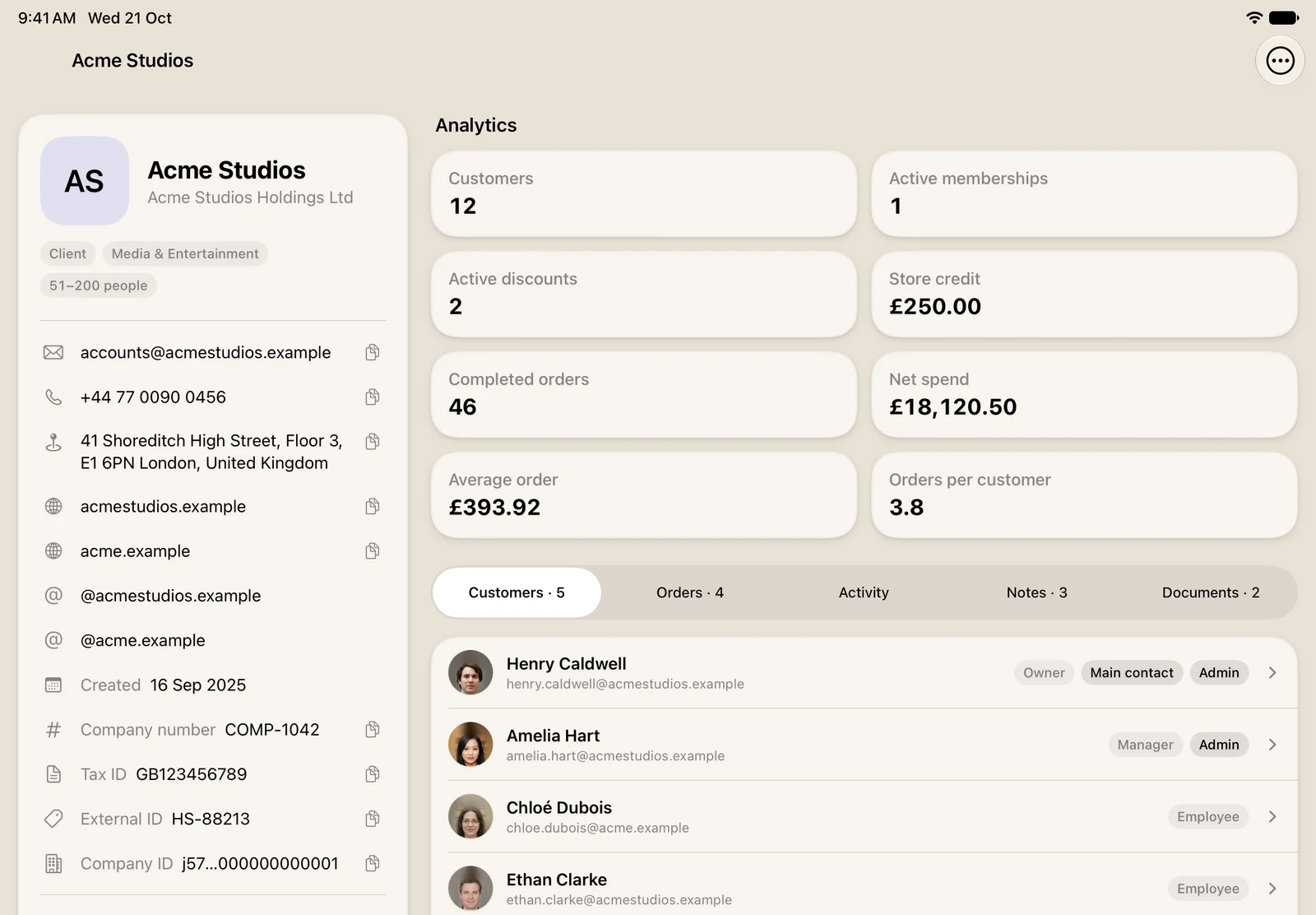
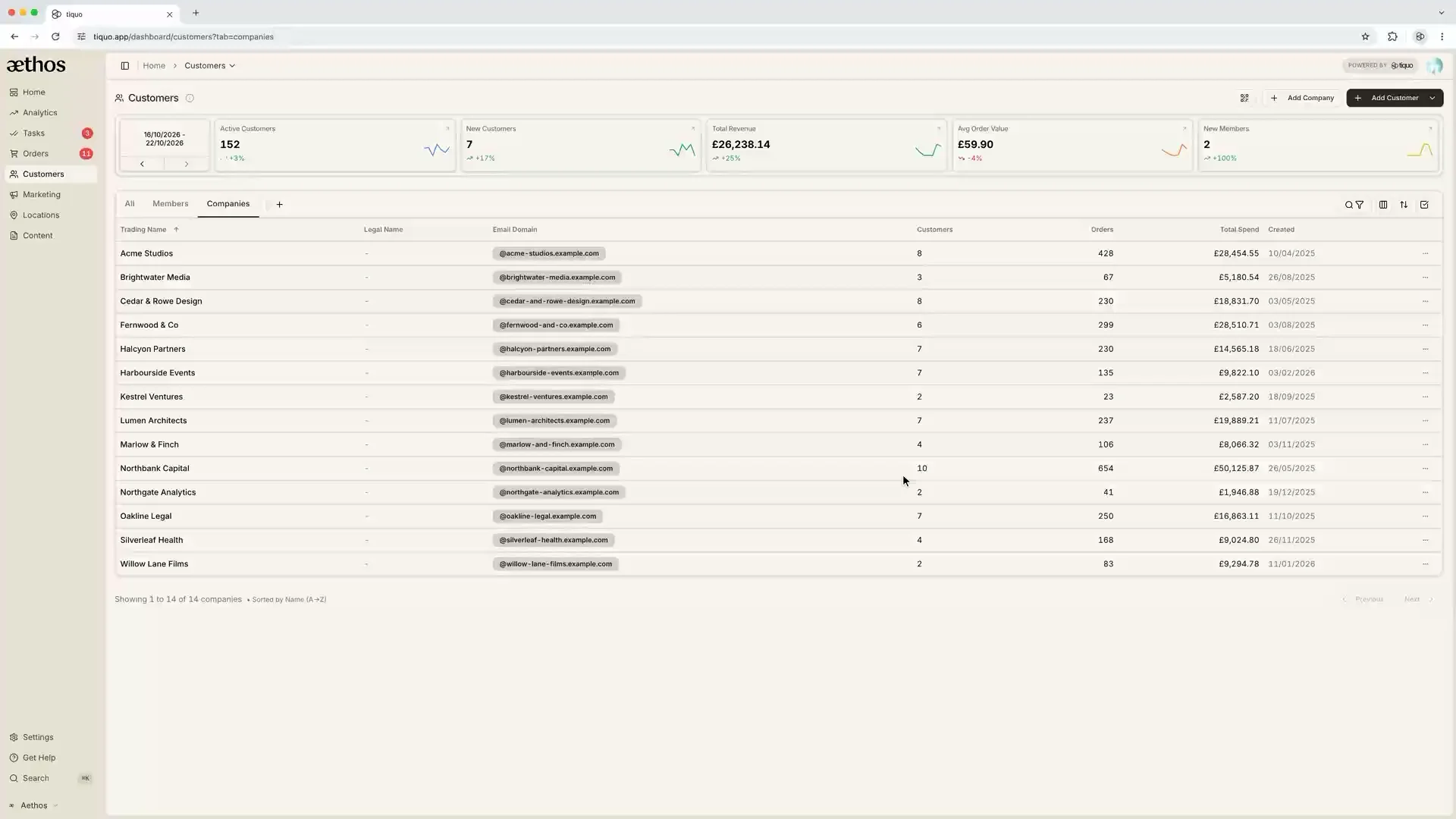
A customer profile that spans the whole business. Nexudus holds member records tied to workspace usage, bookings, and billing. For a workspace-centric operation, that is enough. For a business with multiple revenue streams, it leaves a significant blind spot. Tiquo builds a unified customer profile from every interaction across every part of the operation, updated in real time. The advanced CRM layer adds AI-driven predictive analytics that model customer lifetime value and forecast behaviour. The automated social graph maps relationships between members, which matters for operators who want to understand how corporate accounts, communities, and social networks interact with their space.

Payments designed for operational complexity. Many mixed-use operators and multi-site businesses run through multiple legal entities. Tiquo’s intelligent multi-entity payments take a single customer payment and automatically split it across the correct legal entities with instant invoicing. There is nothing to reconcile at the end of the month because the split happens at the point of transaction. Club Pay lets members charge any product or service anywhere in the building to their account and settle from their phone, with support for equal splits, item-level splits, percentage splits, and custom payment arrangements.

Loyalty and memberships across every vertical. Nexudus manages workspace memberships within its own lane. Extending those benefits to a café, a gym, an event programme, a hotel, or a retail offering requires either significant configuration or external tools. Tiquo’s unified loyalty and membership commerce works natively across every sub-location and every product vertical. Members earn and redeem benefits wherever they are in the business. Gift cards work across all brands and outlets, with operator control over exactly where they can be redeemed.

The rest of the operation, built in. For operators who have moved beyond pure workspace, Nexudus requires separate systems for food and beverage, wellness, private hire events, hotel management, and ticketing. In Tiquo, all of these are native. A member moving from their desk to the café to a fitness class to dinner to a private event is in the same system throughout. Every interaction builds the same profile and feeds the same reporting.

A platform people actually find easy to use. One of the clearest advantages Tiquo has over Nexudus for growing operators is how quickly teams get productive on it. The interface was built to be intuitive from day one, on any device, without the configuration overhead that makes Nexudus feel heavy. In high-turnover hospitality and workspace environments, the difference between a system staff can pick up quickly and one that requires weeks of training is felt every time someone new joins the team. Tiquo runs identically on web, iPhone, iPad, Android, and dedicated POS hardware, with full functionality on each.

Who Should Still Consider Nexudus

Nexudus makes some sense for operators who are primarily selling workspace and whose business closely matches the category it was built for: traditional coworking brands, serviced offices, and flex space operators focused on occupancy, contracts, and member management. In that context, its depth in booking, billing, access, and community tools may work in its favour.

The calculus changes when the business grows into something more mixed, more hospitality-led, or more commercially complex. At that point, the question is not whether Nexudus is functional coworking software. The question is whether coworking software is still the right category of tool for the business you are running.

When the status quo becomes outdated, carrying it forward costs more than replacing it. For operators whose answer points toward a platform built for the full operation, Tiquo offers exactly that.

We use cookies

We use cookies to improve your experience on our site. By continuing to browse, you agree to our use of cookies.

Learn more