Lightspeed Alternatives: When POS Software Stops Being Enough

Lightspeed offers point of sale, payments, inventory, reporting, e-commerce and multi-location management for retail and hospitality. It is a relevant comparison for venues managing complex stock or several sites.
A hospitality business may also need services outside its POS setup. The decision to change should start with those requirements and the work involved in connecting them.
Where Lightspeed Has Depth
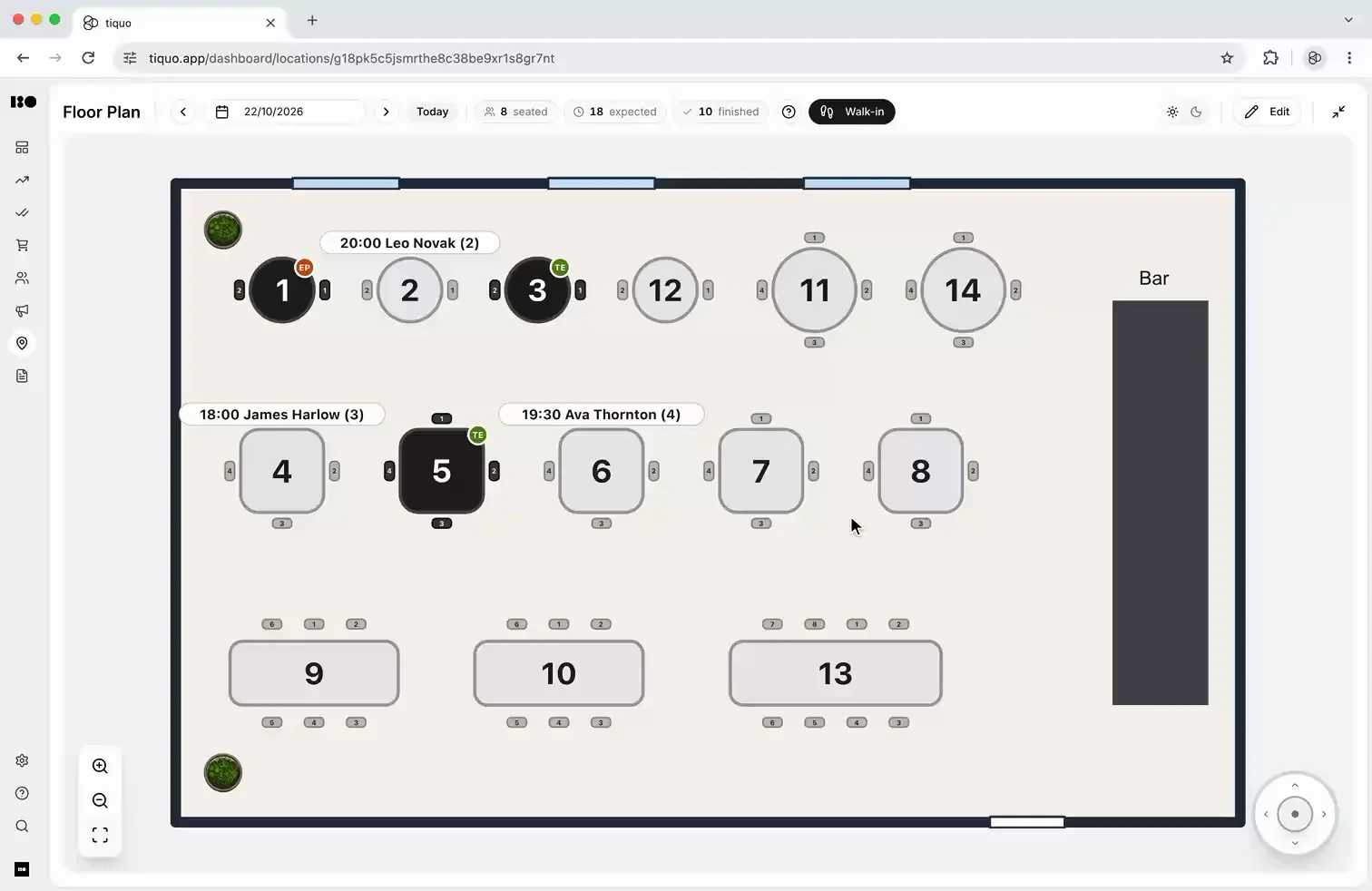
Review inventory variants, bundles, reorder points, purchase orders, suppliers and multi-location stock control. For restaurants, include table management, staff permissions and reports. Retailers should also test how online and in-person sales connect.
If stock, tills and sales reporting are the main needs, focus the comparison there. A broader platform needs to justify the work of replacing the current setup.
Where the Frustration Usually Starts
A hospitality group may also run bookings, memberships, loyalty, gift cards, accommodation, events or wellness. It may need customer records across those services and payment allocation across legal entities.
Lightspeed’s integrations marketplace connects to accounting, e-commerce, loyalty, delivery and marketing tools. Include the required products and connections in the cost and workflow review.
Some Businesses Also Find Lightspeed Heavier Than Expected
Have staff try the inventory, integration and multi-location tasks the business needs. Test terminal connections, sync behaviour and mobile checkout alongside routine till use.
Use a representative product catalogue when testing stock reconciliation, including more than 1,000 items if that reflects your operation. Confirm which modules and support services are included in the quote.
Payment options can depend on the market and product. Confirm the supported providers, fees and routing options, especially if the business has several legal entities.
No Branding on the Customer Side
Inspect payment screens, receipts, loyalty flows and other customer-facing interactions. Confirm what can be customised and where the provider’s branding remains.
Tiquo supports the operator’s branding across the booking flow, loyalty programme and payment journey.
Signs It Might Be Time to Look at Alternatives
A review may be useful when staff rely on several systems for bookings, memberships, CRM or hotel operations, or finance spends substantial time combining their records.
Include any gaps in customer history, payment allocation, integration reliability or branding. Use those examples to test whether a replacement would improve the way the venue works.
How Tiquo Compares
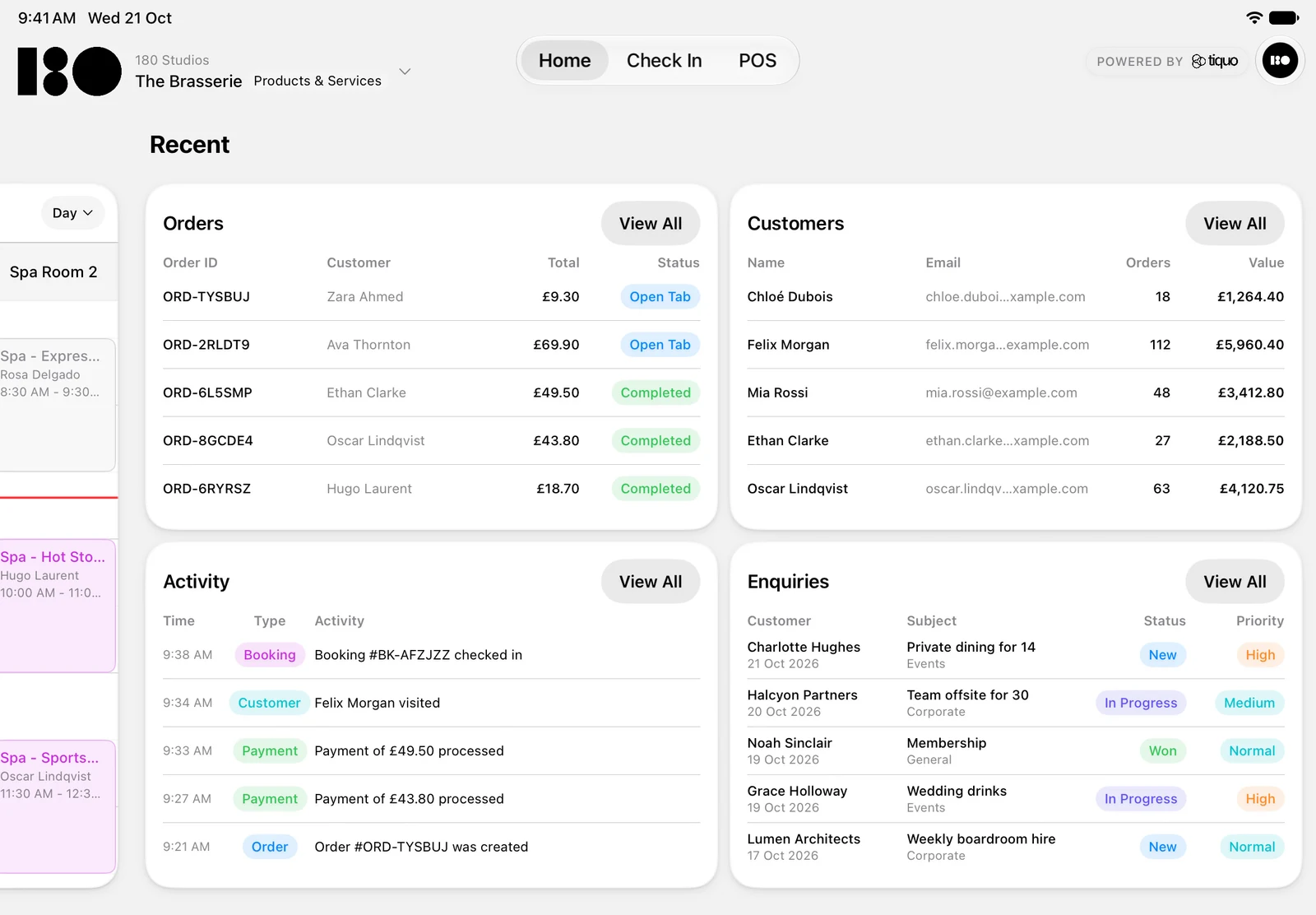
Tiquo combines POS, CRM, memberships, bookings, loyalty, hotel PMS, payments, events, ticketing, gift cards and analytics on a shared database.
| Lightspeed | Tiquo | |
|---|---|---|
| Point of sale | Restaurant or retail workflows | Built in |
| Retail inventory management | Variants, purchasing and stock across sites | Built in |
| Multi-location management | Shared and local settings | Shared platform and reporting |
| Hotel PMS | External tools and connections required | Hotel PMS and spa bookings included |
| Spa and wellness bookings | External tools and connections required | Hotel PMS and spa bookings included |
| Membership commerce | Cross-service coverage and integrations | Benefits across sublocations and services |
| Cross-location loyalty | Cross-service coverage and integrations | Benefits across sublocations and services |
| Multi-entity payment splitting | Options for your market and entities | Allocations for configured connected accounts |
| Customer CRM and profiles | Activity available across services | Shared customer profile and Social Graph |
| Predictive customer value and next-order timing | Available analytics | Predictive lifetime value and next-order ranges |
| Customer-facing branding | Customisation of customer-facing flows | Operator branding |
| Payment routing flexibility | Providers and routing supported in your market | Stripe processing and configured allocations |
Activity across the business feeds the same customer profile. Customer analytics adds predictive lifetime value and expected next-order ranges. Social Graph shows relationships between customers, companies and groups.
Tiquo uses Stripe for online, terminal and Tap to Pay processing. For configured connected accounts, a checkout can be allocated across several payment destinations and linked to the order. Tiquo also supports stored credit for eligible products and services. Split payments support equal shares, individual items, percentages and custom amounts across supported payment methods.
Membership and loyalty benefits can apply across services and sublocations. Operators control where and how gift cards are redeemed across brands and outlets.
Hotel management, spa bookings and private hire events are included alongside POS. A guest’s activity across those services contributes to the same profile.
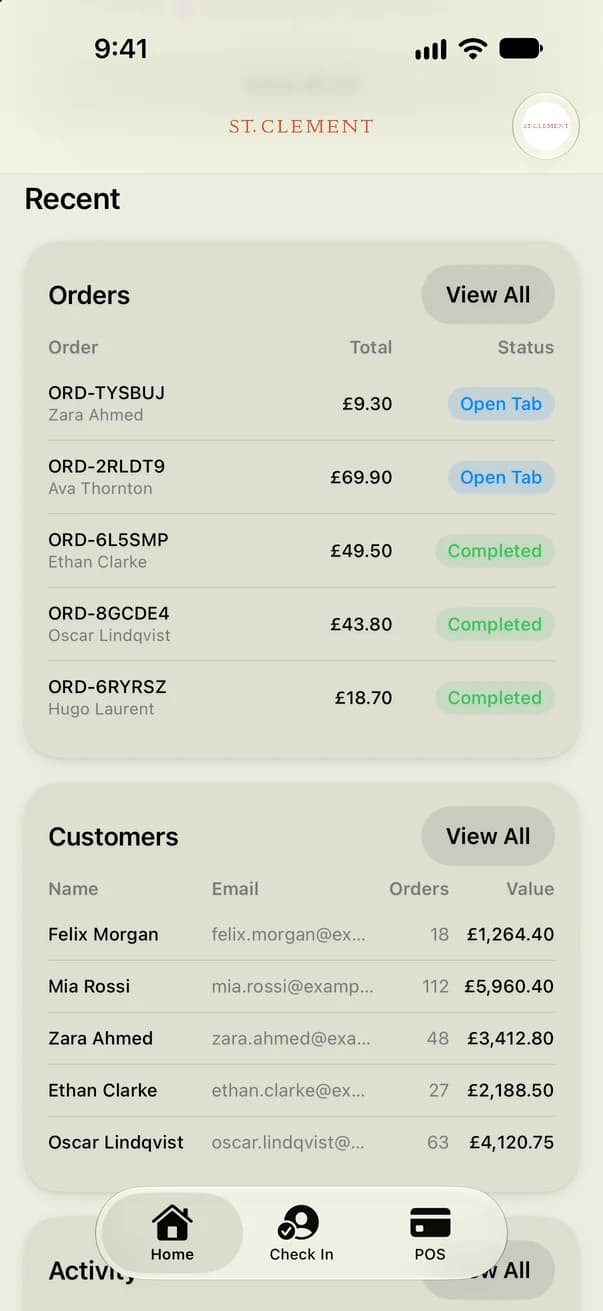
Staff can use Tiquo on the web, iPhone, iPad, Android and dedicated POS hardware. Test the intended devices and roles as part of the evaluation.
Portfolio reporting brings together revenue, customer activity and performance across properties, brands and entities.
Making the Decision
For retail inventory, restaurant POS or multi-location food service, assess the depth of those tools first.
If the business also runs accommodation, wellness, memberships or events, compare how the complete setup handles a guest across those services. Include implementation costs and the staff work that would remain.




Latest Stories
WebMCP explained: how AI agents can book through hospitality websites
What WebMCP is, how websites register tools that AI agents in the browser can call, where the standard and Chrome support stand in October 2026, and what it means for booking pages.

How to sell spa treatments and dining to hotel guests before they arrive
Pre-arrival upselling for hotels: when to send spa and dining offers, what to offer which guests, how to make offers bookable, and the UK consent rules for promotional messages.
How to split bills and move tabs between tables
How to split bills by item, seat, equal share or amount, and how to move a tab or selected items to another table without sending food to the kitchen twice or charging twice.