Lightspeed alternatives: why hospitality operators are moving to Tiquo

Lightspeed serves retail and hospitality businesses, with restaurant products that have developed through several acquisitions. When comparing alternatives, identify the specific product and workflows your venue uses.
Lightspeed’s acquisitions include Upserve, Gastrofix, Kounta and iKentoo. Each began as a standalone POS product for particular markets.
How Lightspeed got here
Assess the version and configuration you use directly. Brand-level feature lists may not answer the questions your team has about its own setup.
Start with orders, menus, payments, reporting and inventory, then include any other systems needed to run the venue.
Test group reporting and menu updates across locations. Record where staff duplicate work or use additional tools, along with the cost and support arrangements for each connection.
Where operators start hitting walls
Confirm payment terms for your market and agreement, including any charges for a third-party processor. Compare the full cost using the business’s transaction mix.
Review minimum terms, notice periods and any termination charges before planning a move. These affect the schedule and total migration cost.
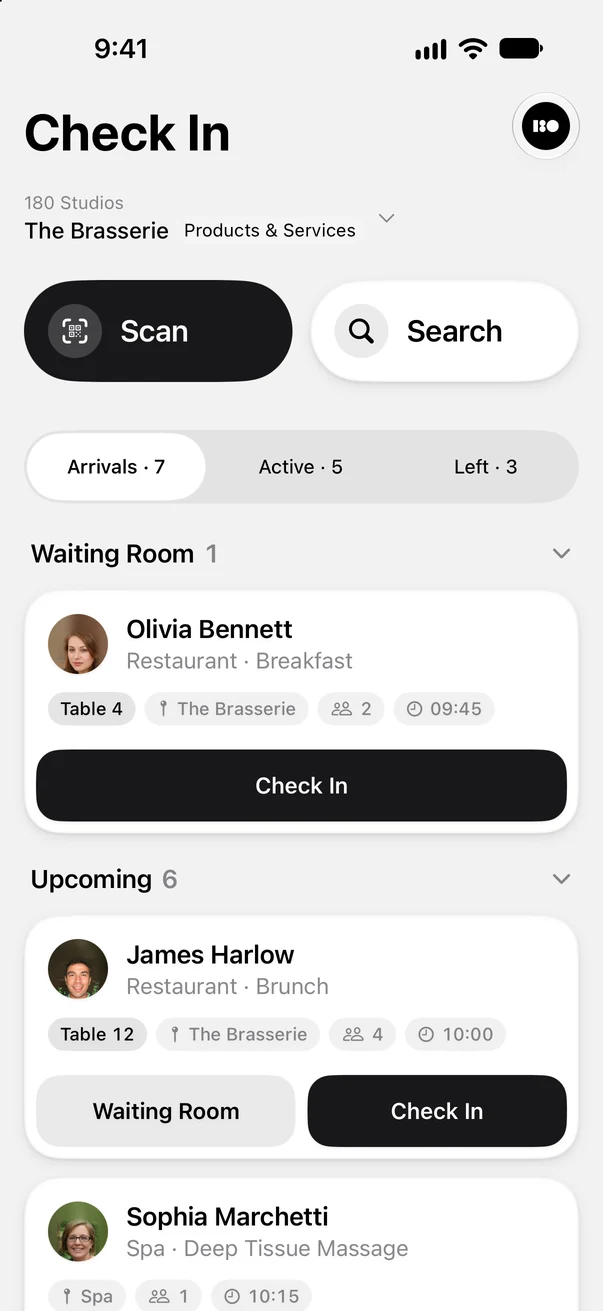
Check how bookings, payments, memberships, documents and customer relationships connect across locations. Note which records staff can view together and which require another system.
Repeat that exercise for the number of sites you expect to run, whether three, five or ten. A manageable task at one location may take more coordination across a group.
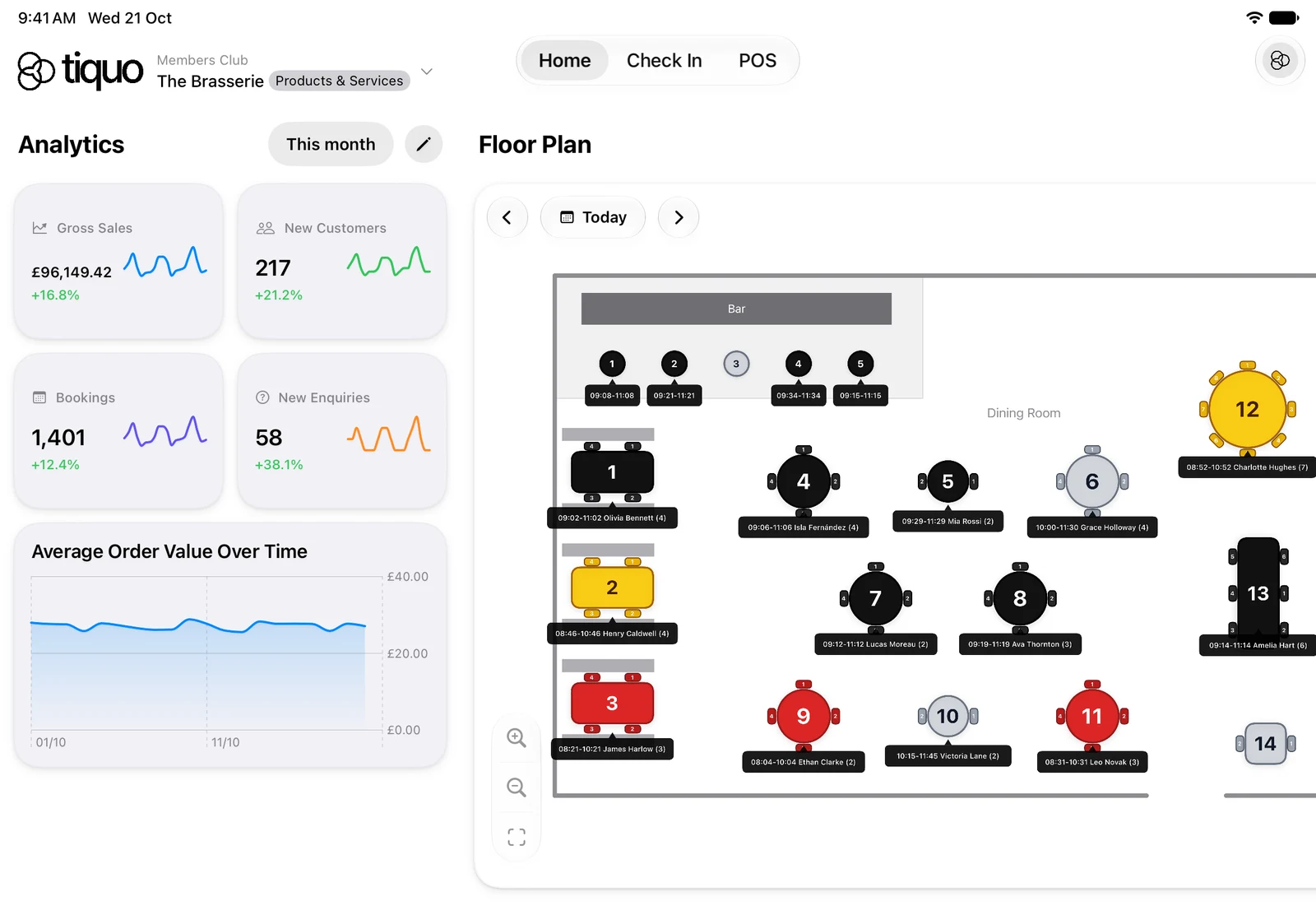
Tiquo was built as a shared platform for hospitality businesses with several sites, formats and revenue streams.
What moving to Tiquo actually looks like
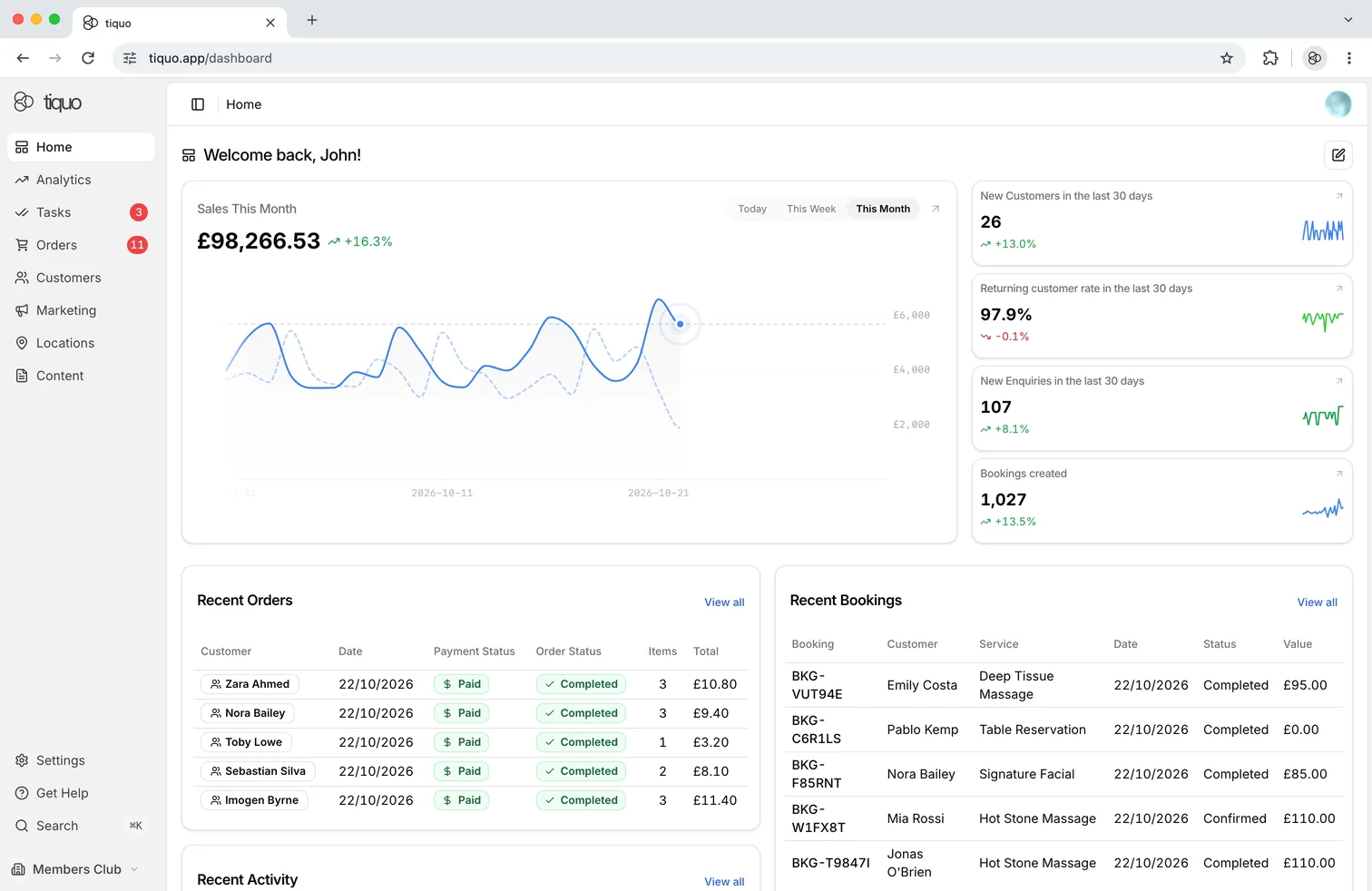
Orders, payments, bookings, memberships, documents, contracts, customer identity, locations and staff permissions use the same data model.
Tiquo uses Stripe for online, terminal and Tap to Pay processing. Split payments, tips, refunds, configured allocations and reporting stay linked to order and booking records.
A room booking, restaurant purchase, event visit and membership can contribute to the same customer profile across locations and brands. That history supports customer value reporting, loyalty and marketing.
Who is actually making this switch
New sites, sublocations, brands and formats can inherit shared rules and use local settings. Include the configuration and implementation work for each addition in the rollout plan.
A review may be useful when food service, memberships, events or coworking have become substantial parts of the operation. Repeated reconciliation and incomplete customer records are concrete tasks to test in a replacement.
If the current Lightspeed setup meets the restaurant’s needs, weigh any benefit against the disruption and cost of moving.
Is it the right move for you?
For a more complex group, compare the entire setup: subscriptions, integrations, staff work, reporting and customer experience.
Tiquo is an option for bringing those activities onto a shared platform. Use the workflows identified in your review to assess whether it would solve the problems your team faces.



Latest Stories
WebMCP explained: how AI agents can book through hospitality websites
What WebMCP is, how websites register tools that AI agents in the browser can call, where the standard and Chrome support stand in October 2026, and what it means for booking pages.

How to sell spa treatments and dining to hotel guests before they arrive
Pre-arrival upselling for hotels: when to send spa and dining offers, what to offer which guests, how to make offers bookable, and the UK consent rules for promotional messages.

How to split bills and move tabs between tables
How to split bills by item, seat, equal share or amount, and how to move a tab or selected items to another table without sending food to the kitchen twice or charging twice.