One platform for all your business entities.
Run separate locations, brands or legal entities on shared infrastructure. See operations and finances across the business, and decide what each local team can manage.
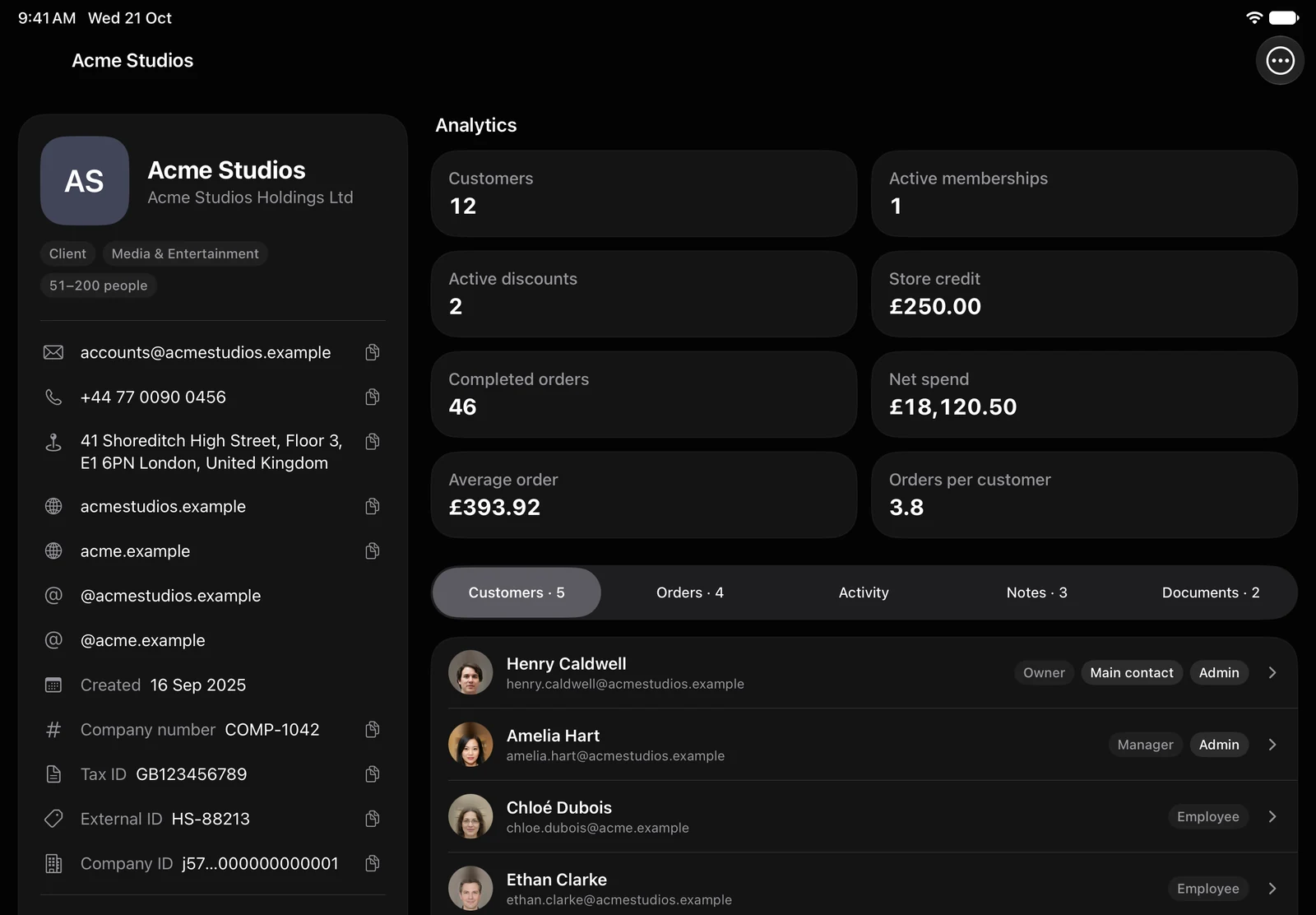

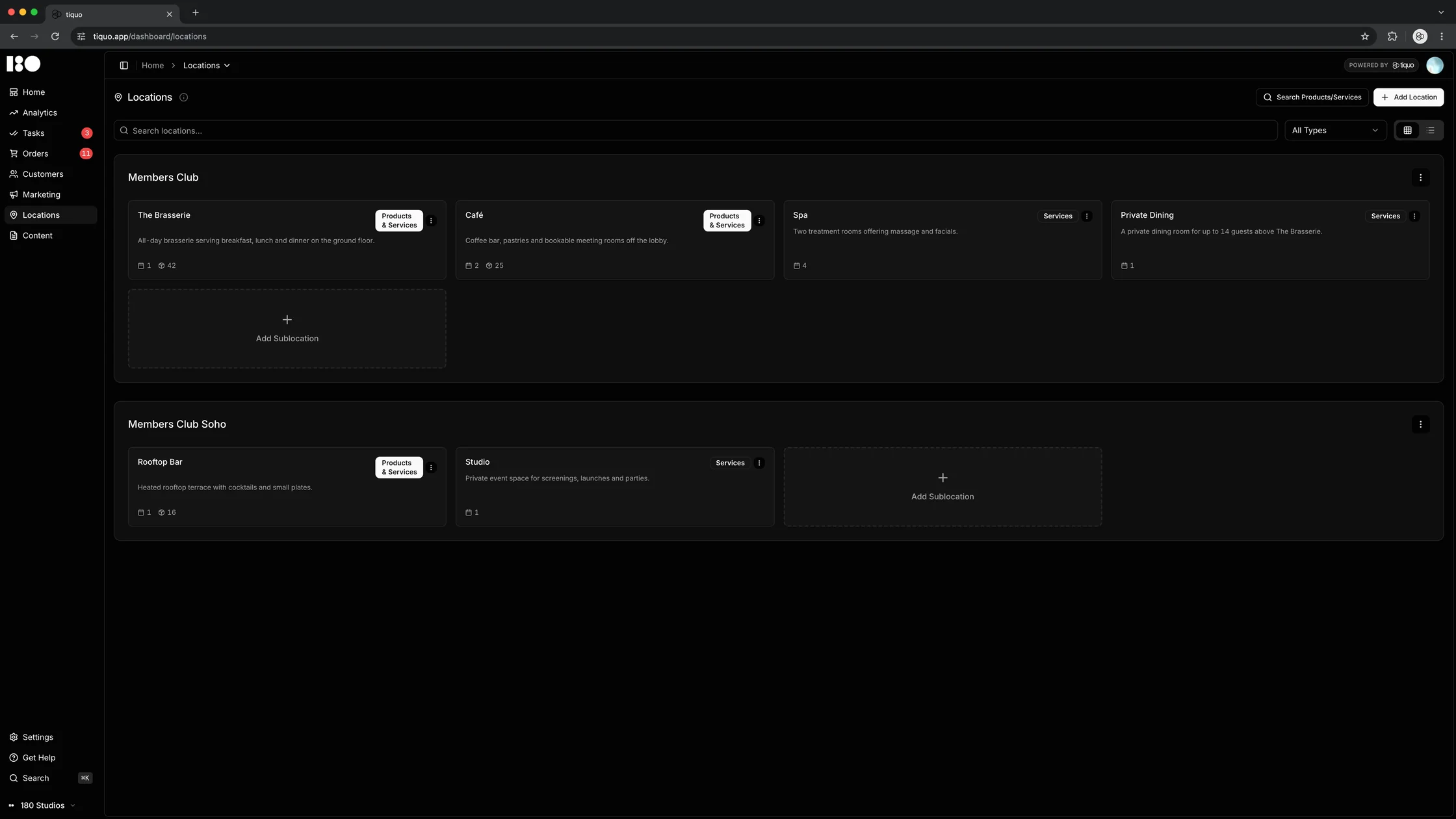

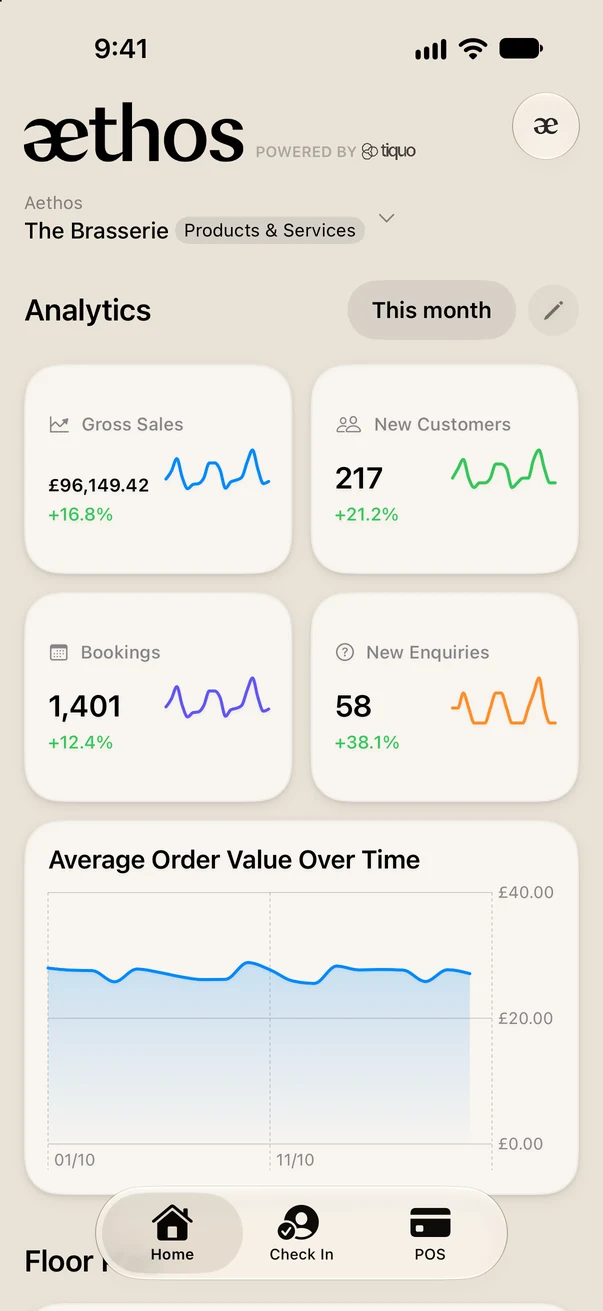

Central control, local identity.
Locations
Add LocationHarbour House Hotel
Spa
Treatments, day passes and spa memberships
Restaurant
Table bookings and the restaurant menu
Rooms
Guest rooms and suites
The Quay Club
Bar
Drinks and bar food
Gym
Classes and personal training
Manage entities with precision.
Define legal entities, locations, brands, sublocations and business units to match your organisation's structure.
Shared standards with local customization.
Standardize settings like pricing logic, services, and reporting templates where needed, while allowing local customization where it matters.
Centralized policies with local enforcement.
Apply shared policies and rules at the entity level and enforce them where appropriate without removing local control.
More visibility. Less overhead.
Up to
70%
reduction in admin time managing multiple locations
Up to
5x
faster reporting across your portfolio
Up to
100+
locations managed within a single Tiquo account
One data model, every entity.
Connected Stripe Accounts
Manage payment accounts for your locations
Harbour Hotels Ltd
DefaultActiveaccounts@harbourgroup.com
Harbour Clubs Ltd
Activefinance@quayclub.com
Each legal entity keeps its own Stripe account, tax ID and invoice numbering.
Unified data model across entities.
Bookings, payments, customers, forms, memberships, and reporting all share a single data structure across your business.
No conflicting records.
Shared records prevent mismatches between systems, so teams spend less time cleaning up data and comparing conflicting views.
Real-time synchronicity.
Updates within one entity show up in reporting immediately across the platform with full traceability.
Clear finances for every entity.
Entity-specific financial views.
See revenue, costs, fees, and outstanding balances for each legal entity or business unit.
Inter-entity reconciliation simplified.
Internal transactions and settlements across entities are captured clearly, reducing manual accounting adjustments.
Consolidated financial reports.
Combine financial results across entities into portfolio-level dashboards while keeping entity-level detail accessible.
Payments
Reconciled Payouts
All entities
Workflow and access control.
Entity-aware roles and permissions.
Set who can do what within individual entities, teams, or at the central administration level.
Local managers with controlled authority.
Let local managers run day-to-day operations within company policies, while head office can see what's happening.
Team activity tracking.
Track who made changes and where, with audit-friendly history and role-oriented access.
Grows with your organization.
Add entities without rebuilding your stack.
Create new brands, divisions or locations without switching systems or duplicating infrastructure.
Consistent user experience for staff.
Users who work across multiple entities experience consistent workflows and familiar interfaces.
Support for complex organizational structures.
Handle portfolios where locations, legal entities, and divisions require different rules and reporting.